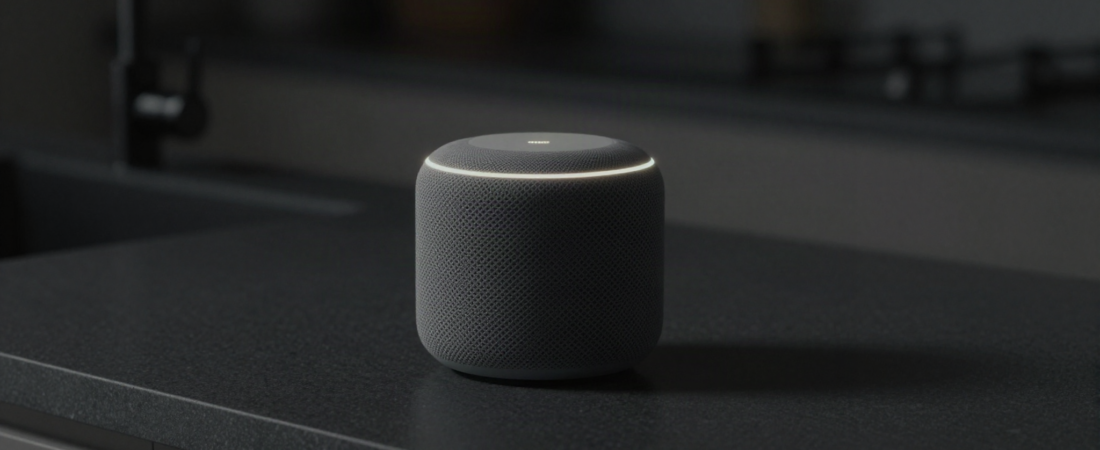
Alexa, Google Home, Siri on the HomePod: these devices sit in kitchens and living rooms specifically to listen for a wake word, which means they’re always listening for something. The question worth asking isn’t whether they’re always recording (they’re generally not), it’s what actually happens in the gap between “always listening for the wake word” and “actually protecting your privacy.”
How wake-word detection actually works
Smart speakers run a small, local model that only recognizes the wake word itself (“Alexa,” “Hey Google,” “Hey Siri”). That model runs on the device and doesn’t send anything anywhere. Only after it detects the wake word does the device start streaming audio to the company’s servers for processing. In theory, casual conversation isn’t being uploaded. In practice, wake-word detection isn’t perfect, and every major smart speaker platform has had documented cases of accidental activations sending real conversations to servers and, in some cases, to human reviewers.
The part companies don’t lead with
For years, Amazon, Google, and Apple all used human contractors to review a sample of voice recordings to improve their systems, including recordings from accidental activations. Public pressure changed some of these practices (opt-outs were added, retention windows shortened), but the underlying setup is still true today: your voice data goes to a company server, gets used to improve their product, and sits in your account history until you delete it.
What to actually change
Turn off “Enable by voice purchasing” if you don’t use it, since accidental activations have led to real accidental orders. Go into your account’s privacy settings (Alexa Privacy settings, Google’s My Activity page, Apple’s Siri & Dictation settings) and set voice recordings to auto-delete after 3 months instead of keeping them indefinitely. Opt out of human review of your recordings, an option on every platform once you know to look for it. Mute the microphone physically when you’re not using it. Every device has a hardware mute button or switch for exactly this reason.
The conversations that matter most
Be more deliberate near smart speakers during anything involving account numbers, passwords read aloud, or sensitive medical or financial conversations. Not because the device is definitely recording, but because the cost of an accidental activation catching that specific conversation is much higher than an accidental activation catching small talk.
The bottom line
Smart speakers aren’t secretly recording everything, but the gap between “not recording everything” and “fully private” is wider than most people assume. Turn off voice purchasing, shorten your retention window, opt out of human review, and use the mute button when it matters. That closes most of the actual gap in about five minutes.
Related reading
- What Data Your Phone Is Sending Right Now
- What Is End-to-End Encryption and Do You Actually Have It?
- Privacy Settings to Change on Every New Device
- Plain-English Glossary — more in the privacy & tracking collection